


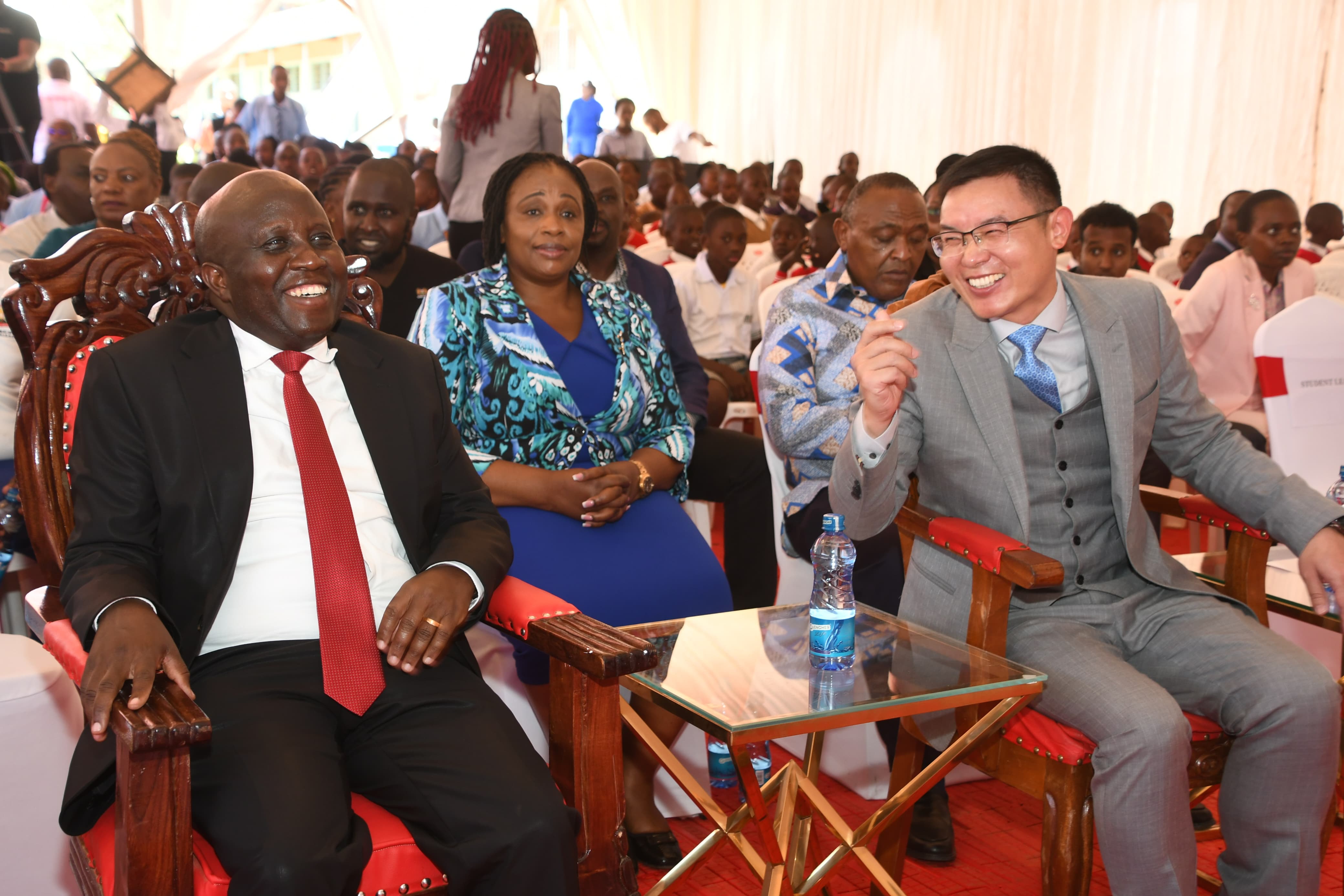
Government launches Digischool Internet project in Machakos
ANNE KANGERO-KNA
The Ministry of Information, Communications and the Digital Economy, in partnership with Huawei and UNESCO, has launched phase two Digischool Internet projects at the Machakos School for the Deaf to expand on internet connectivity and inclusion in schools.
Principal Secretary for ICT, Engineer John Tanui, who presided over the event on behalf of ICT Cabinet Secretary William Kabogo, said the launch was part of the government’s plan of integrating technology into education and ensuring all students, especially those with special needs, are equipped in digital learning through reliable internet.
He said they have provided them with video conferencing solutions to ensure special needs students are connected and to ensure that Kenya Institute of Special Education (KISE) can teach several schools from one location.
“We took a bold step in ensuring every learner, including those in special needs schools have access to digital opportunities thus empowering students with digital skills and bridging the digital divide,” Tanui said.
Tanui affirmed that the several digital hubs deployed in the country are to enable young people to learn and access jobs online that would cater for their needs while encouraging entrepreneurship.
He noted that the ministry is collaborating with the private sector to fill the gap in the provision of resources that the government cannot cover and ensure the whole country is connected.
“We cannot deliver alone as a government, we are working with the private sector to ensure we connect our people and utilize all available solutions to ensure every part of the country is connected,” the PS noted.
Present was Huawei Deputy CEO, Stephen Zhang, who echoed the PS’s remarks adding that internet connectivity is improving the efficiency of education management as it assists teachers access management systems online while improving access to education resources and making learning more interesting and effective.
Zhang pointed out that through the partnership, they have connected other special needs schools in Migori and Tana River Counties with internet and video conferencing facilities and they could then access services at KISE, which has guided experts in providing assessment and rehabilitation services remotely.
“Huawei’s Tech4ALL inclusive, aims to enable an inclusive and sustainable digital world and together with our partners we are committed to emerging technologies and solutions that make the world a more sustainable space for all,” Zhang said.
UNESCO Regional Director for Eastern Africa, Louise Haxthausen said access to the internet opens doorways to unlimited wealth of relevant information, knowledge and educational resources which expands educational opportunities in and beyond the classroom.
Haxthausen disclosed that having the internet is not enough and learning institutions should utilize the internet to improve the quality of teaching and learning through the provision of free digital education content and invest more in accessible technology and universal designs to open more opportunities for learners with disabilities.
He said the first phase of the project connected 13 schools to the internet, benefitting 6,000 learners, while the second phase has so far connected 21 schools to the internet and has benefited 10,000 learners, and will soon be embarking on phase three to include six special needs schools.
He, however, noted that the cost of equipping schools with ICT devices and providing affordable internet is a major investment challenge which requires a broad strategic partnership and cooperation from all stakeholders because the benefits are high and impactful.