

Germany turns to Kenya for software developers and tech talent
Sitna Omar-KNA
Kenya is looking into new collaborations with international tech giants and foreign governments to open digital employment opportunities for its youth.
With Germany emerging as a crucial ally in filling talent gaps in its economy, conversations have been underway to ensure global job opportunities for the Kenyan youths in the technology sector.
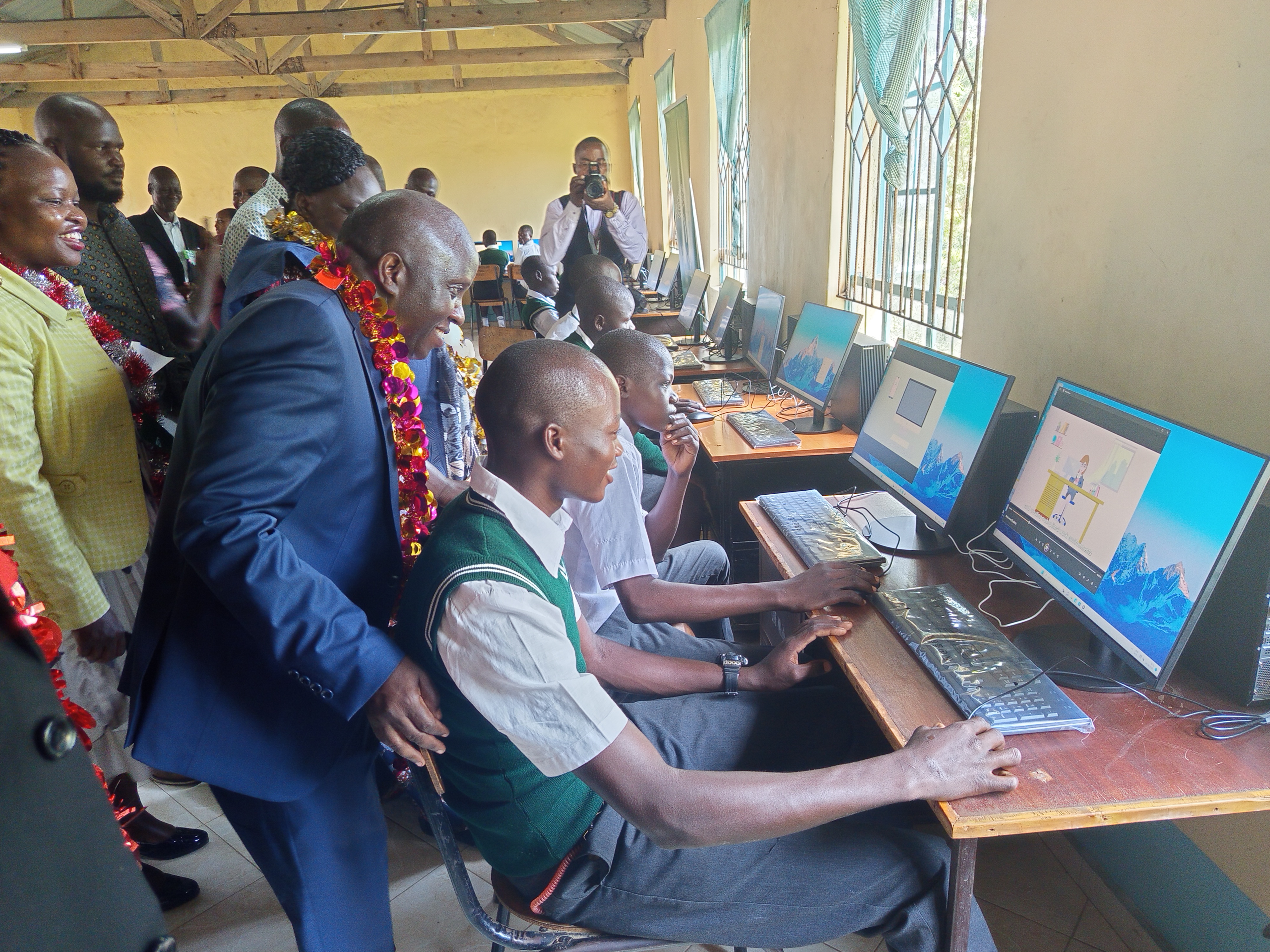
Speaking at the opening of a digital skills laboratory at Ngodhe Mixed Secondary School in Homa Bay County, the Principal Secretary for ICT and Digital Economy Eng. John Tanui disclosed that there is a severe lack of qualified workers in Germany, with over 700,000 job openings, including 150,000 in software development.
“We spoke with the German government, and they told us that there are 700,000 job openings which they are unable to fill due to limited skilled labour. They are engaging us to explore how Kenyan talent can support their economy,” said Tanui.
It is believed that this partnership with the Germany government will open global job opportunities for young people in the technology sector.
He disclosed that he held a meeting with the German software developers' association to discuss the way forward, with plans underway to set up Business Process Outsourcing (BPO) centres in Kenya to tap into the country’s young digital workforce.
Tanui emphasized that there are many opportunities in the digital space and in other initiatives that aim at transforming the economy, citing the Affordable Housing Project that is creating jobs for the youth in the building space professions.
The PS was accompanied by Homa Bay Woman Representative Joyce Bensuda, Konza Technopolis Development Authority CEO John Paul Okwiri, and other county and national government representatives.
Ngodhe Secondary School is now among the beneficiaries in the government’s digital literacy push that saw the school receiving 25 computers to enhance ICT lessons with a fully equipped digital hub to boost access to digital learning tools and opportunities.
“We opened a digital hub that will enable the students to connect to the digital space. The 25 computers will help in building their capabilities,” said Tanui.
He affirmed that part of the visit to Homa Bay involved assessing the status of internet connectivity in the region, highlighting significant progress in the Digital Superhighway Project being implemented in collaboration with Kenya Power and Lighting company.
“We are targeting the entire Nyanza region to connect government institutions and when connected it will allow private sectors, the big internet providers and small network services providers to be able to connect too,” he noted.
The government has so far connected 1,032 institutions across the Nyanza region, marking a 50 per cent connection rate, with 103 in Homa Bay.
Tanui and his team visited an upcoming digital hub site at Radiro Primary School to monitor the preparation progress ahead of a ground-breaking ceremony scheduled in a month’s time.
“We are also working to expand and fulfil the commitment we had of setting up 100 digital hubs across the country,” he noted.
The PS said the ministry is working closely with Members of Parliament, who amended the NG-CDF law to allow use of the fund for digital hubs while the government handles fibre connectivity, adding, “Our goal is to ensure every public institution including schools and chiefs’ offices are fully connected.”
Tanui further emphasized the need to equip schools in remote areas with digital devices and internet connectivity, to ensure inclusive in accessing the digital space.
“We are also working with the leaders to identify other locations such as day secondary schools where youth in those areas are unable to access internet connection to access the digital space so that we can provide them with devices,” he said.