
Electric Vehicles to benefit from toll discounts under proposed national policy
GEORGE KAIGA AND LINDSAY KISANGO-KNA
Electric vehicles (EVs) will be eligible for discounts and incentives once the government implements the proposed National Tolling Policy, which is currently under public participation.
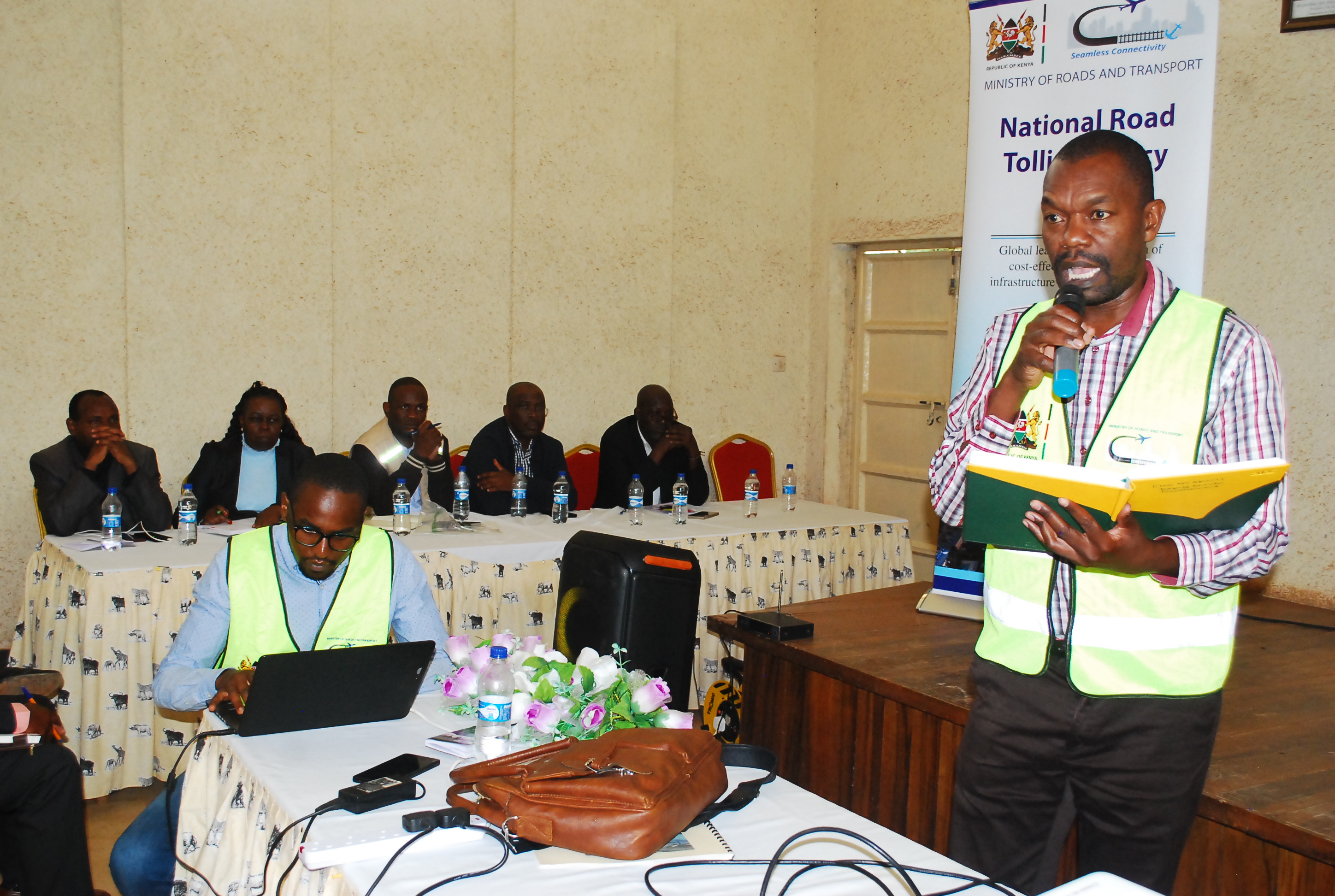
Speaking in Kakamega during a public engagement on the policy, Engineer Billy Kimko from the Kenya Roads Board stated that electric vehicles will receive discounts based on their reduced carbon emissions.
Eng. Kimko added that the policy will also benefit high-occupancy private vehicles and those traveling short distances through toll points, ensuring that charges are proportional to road usage frequency.
Exempt from toll payments are military vehicles and equipment, police vehicles and equipment, ambulances, and fire service vehicles.
As part of the proposal, the government aims to introduce a National Tolling Policy on major roads to generate additional revenue for road maintenance and rehabilitation.
The decision has also been informed by dwindling funding from international financial lenders as well as the introduction of e-mobility that is projected to cause decline in Roads Maintenance Fuel Levy (RMFL) collections.
Kimko said there is a significant gap in the 2024/2025 financial year budget for roads maintenance and rehabilitation, in the country. He said the Roads Maintenance Fuel Levy (RMFL) released approximately Sh100 billion only against Sh253 billion needed to maintain the existing network.
“Kenya’s road network is 239,122 kilometers, with 164,966 being classified under national government, while 74,155 kilometers are unclassified and under county government,” he added.
“It is against this background that the gap is sourcing for alternative ways of getting extra funds including entering into Public-Private Partnership (PPP) as the case with the Nairobi Expressway in order to bridge funding gaps,” he added.
According to the policy, tolling will be introduced on four types of roads, among them newly constructed roads, improved roads and those of a higher quality than un-tolled roads.
The government will develop a vehicle identification and registration system that will be linked to automatic number plate recognition.
“But before the tolling system is implemented, roads identified for tolling will be tolled by way of conventional toll charging points and pre-paid payment system,” Engineer Kimko said.
On his part, the Deputy Director and Technical Working Group Team Leader on National Tolling Policy Eng. Kennedy Nyabuto said the Policy is based on the National Funding Policy that seeks more funds to maintain roads.
Speaking at the forum, participants faulted the government for focusing a lot on major roads at the expense of rural roads that are in deplorable condition.
“Many roads in Kakamega County remain in poor condition, we need to be told how the policy will address this like the Lurambi- Navakholo-Musikoma road that has never been rehabilitated despite being allocated funds,” Wanyimbo Sangula said.
The participants demanded that the government should come up with an equitable system of funds for road maintenance so that some areas are not neglected.
The Transport Cabinet Secretary and his National Treasury counterpart will determine initial charges which will then be updated quarterly to account for inflation, exchange rate, tax changes and economic growth among other factors.
Simon Shiundu, a matatu operator, said this will be double taxation as Public Service Vehicles are already paying 3,500 shillings annually to the county to operate.
Road users who fail to pay a toll fee will face a Sh50,000 fine or sixmonth jail term or both. The technical working group on the National Tolling Policy is set to meet the Parliamentary Committee on Roads and Infrastructure on 31st March this year, before the document is subjected to validation and approval by the Cabinet.