
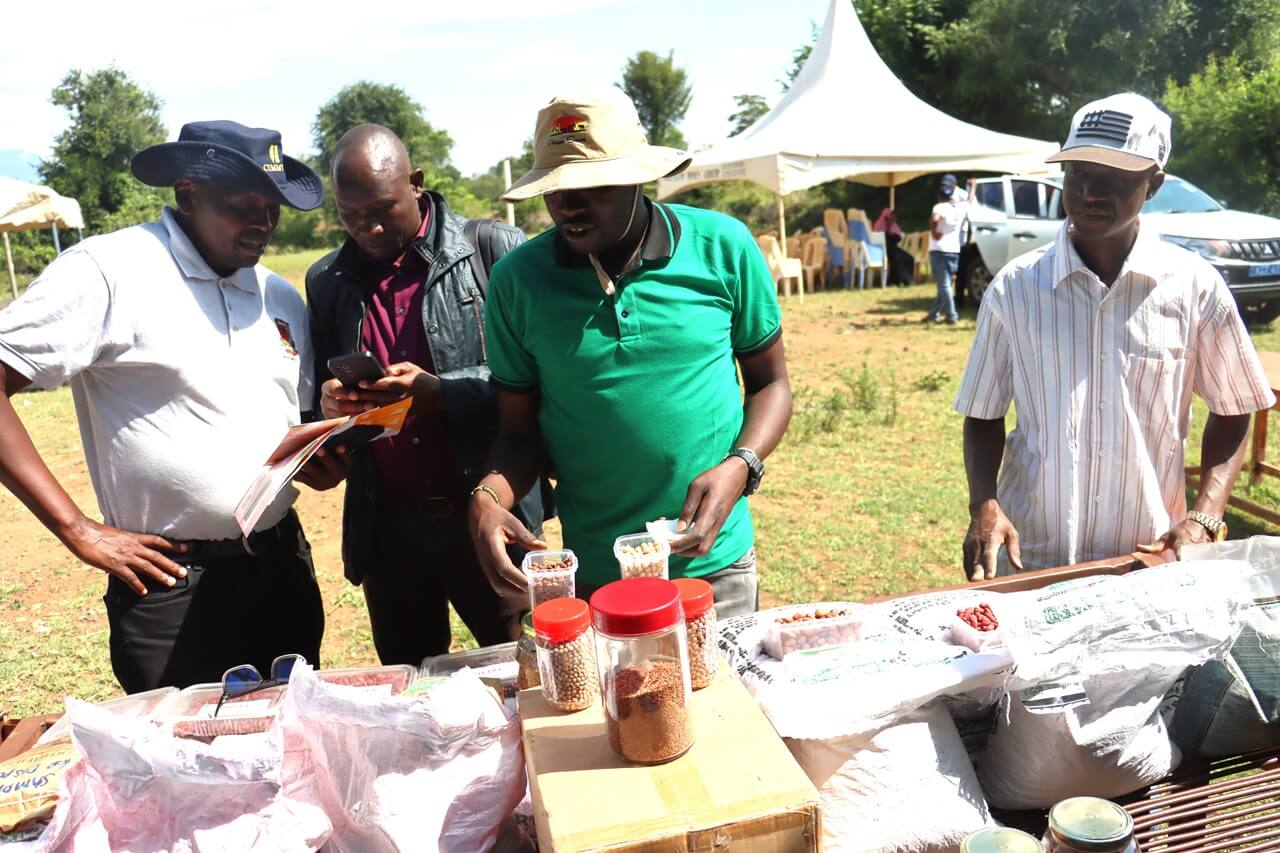
Egerton launches high-yielding, drought-resistant legume seeds
Esther Mwangi and Nicole Nduuti-KNA
Egerton University, with the support from the United Nations, has unveiled new drought resistant, fast maturing, high-yielding and nutritious legume seed varieties and technologies aimed at addressing food insecurity in the region.
The University’s Agro-Science Park Seeds Unit unveiled the improved legume seed varieties including groundnuts, beans, groundnuts, Pigeon peas, and chickpeas.
The Director of Agro-Science Park (GOK, Vision 2030 Flagship Project), Professor Paul Kimurto, said the varieties were developed in a four-year Food Safety for Africa (FS4Africa) project that was being supported by the European Union and was aimed at addressing food insecurity, especially in arid and semi-arid areas.
Prof Kimurto said the FS4 Africa project, which kicked off in 2021 and expected to wind up at the end of the year 2025, had made significant contributions to agricultural research and development needs of arid and semi-arid counties.
He said, with the unpredictable climate change realities, there was a need for investing in research that will yield seed varieties adaptable to nature’s vagaries.
He however assured that Egerton University’s Agro-Science Park Seeds Unit was dedicated to improving farming productivity, adding that a team from the unit was conducting field trials in Baringo County, testing new drought-tolerant seed varieties to support farmers in the dry region.
The Director indicated that the main objective of the seed development initiative was to contribute to poverty reduction in ASALs through increasing the income levels of farmers through development and utilization of appropriate agricultural technologies.
One feature of the initiative, the Director explained, was the participatory variety evaluation and selection process that, he said, was being led by Dr Maurice Oyoo, a biotechnology specialist at Egerton University, adding the hands-on approach entailed involvement of farmers directly in selecting the seed varieties that work best for them.
Professor Kimurto said the method, also known as participatory plant breeding, ensured that farmers were active participants in the process, allowing them to choose high-yield, disease-resistant varieties that were well-suited to local growing conditions.
“This boosts crop productivity and ensures that the developed cultivars are practical and beneficial for the communities,” he said.
Professor Kimurto, who is also Head of Egerton University Seed Unit and Team Leader Seeds of Gold Communication Platform, explained that the new Ndovu groundnut variety was tipped to double farmers' produce and incomes as it could be used in production of food, oils, biofuels and animal feeds and took only four to five months to mature.
Unlike the normal groundnuts where farmers harvest on average 800-kilogram per acre, the Director explained that the Ndovu variety could yield 1.5 tonnes per acre saying this increased farmers' income.
The Director said the Ndovu variety was crossbred from the local groundnuts that are small to come up with a new larger and high-yielding variety that was best suited to hot and dry areas. Nyota and Mwangaza groundnut seeds were earlier released by the University to the market.
Saying that Egerton University had already contracted and was working with groundnut farmers in Baringo, Elgeyo Marakwet and Turkana Counties, the Director said the farmers in the three counties have been trained on the best farming practices to reduce aflatoxins in groundnut harvests.