
EAC partner states bank on inland waterways transport to cut carbon emissions
CHRIS MAHANDARA-KNA
East Africa Community (EAC) Partner States have rooted for the strengthening of Inland Waterways Transport (IWT) to reduce carbon emissions in the region.
EAC Deputy Secretary General in charge of infrastructure, productive, social and political sectors Andrea Aguer Ariik said inland waterway transport in the region presents an environmentally-friendly alternative to road and rail transport.
The mode of transport, he said, has proved to consume six times less energy than road transport and twice as much as rail with the carbon emissions typically below other transportation modes.
The Deputy Secretary General added that water transport is the way to go given its potential to move substantial volumes of bulk goods in the region through shorter maritime routes with less interruptions.
He said with improved transport infrastructure on Lake Victoria, the region is capable of generating an annual trade worth USD60 billion while at the same time boosting tourism numbers.
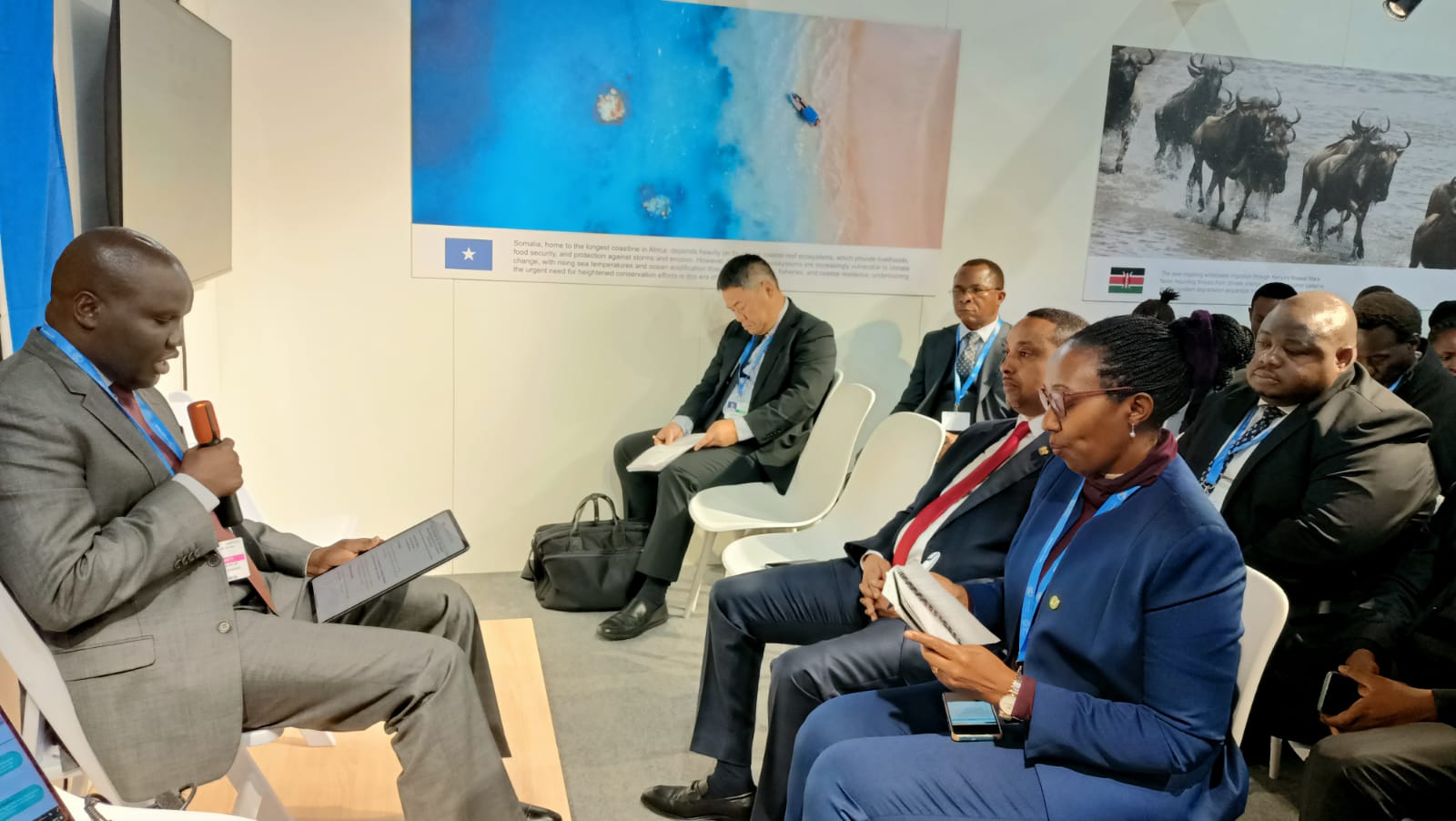
Speaking during a side event at the COP29 summit in Baku, Azerbaijan, Ariik said the region's transport networks could leverage lakes and rivers to enhance regional integration and trade.
"While road and rail systems necessitate ongoing maintenance and upgrades, navigable waterways require considerably less investment and can be seamlessly integrated with existing road and rail links," he said.
The EAC partner states, he said, have made great strides in strengthening Inland Water Transport through the renovation of key ports, including Kisumu, Mwanza, and Port Bell, which have greatly improved the navigability of Lake Victoria.
Construction of the new Bukasa Port in Uganda, he added, will establish a reliable, effective, and sustainable multi-modal transport system along the Central and Northern Corridor.
Additionally, the rehabilitation of vessels such as the MV Uhuru I, MV Umoja, MV Victoria, and MV Butiama, along with the introduction of new cargo and passenger vessels like the MV Mwanza and MV Uhuru II, he said, are positive indicators.
He added that the launch of two tankers, the MT Kabaka Mutebi II and Mt Elgon, with a combined capacity of approximately 10 million litres will enhance efficient transportation of fuel from the Kenya Pipeline Depot in Kisumu to Port Bell in Uganda through Lake Victoria, removing hundreds of trucks, which are behind the rising carbon emissions in the area, from the road.
"These tankers have effectively removed around 300 fuel trucks from the roads, thereby minimizing pollution," he said, adding that other key investments include the construction and modernization of dry-docking facilities at Mwanza and Kisumu ports, along with the ongoing establishment of Maritime Rescue Coordination Centres in Mwanza, Entebbe, and Kisumu.
Besides Lake Victoria, Akagera River which flows through Rwanda, Tanzania and Uganda, and River Nile which flows through 11 countries, have the potential to deliver significant benefits to Africa, he said.
"Once fully developed for navigation, these waterways could optimize the use of the continent's natural resources, driving increased development and economic growth," Ariik said.
Sustainable development of inland waterways, he said, is however hampered by lack of funds to fix the infrastructure, inland ports, navigation aids and updated charts and signals.
Other challenges include lack of regional regulatory framework and shortage of qualified personnel, which limits the current and future potential of inland navigation, he noted.
He called for collaboration between development partners and the Lake Victoria Basin Commission (LVBC) to effectively address the challenges.
The session which was moderated by LVBC Deputy Executive Secretary (ES) Eng. Coletha Ruhamya was also graced by EAC Principal Secretary (PS) Abdi Dubat, African Development Bank Manager in charge of Transport and Logistics Division Marco Yagamuchi, African Union Commission (AUC) Senior Policy Officer for Maritime Affairs Dr. Raissa Ada Allogo and TradeMark Africa (TMA) Acting Country Director (Kenya) Dr. Hannah Ngugi.
Other panellists included EAC Principal Civil Engineer and Head of Transport and Works Division Directorate of Infrastructure Eng. Godfrey Enzama and Maritime Organization for Eastern, Southern, and Northern Africa (MOESNA) Transport Expert Jonah Mumbya.