
2.4 million-tonne leather factory transforms hides and skins market in Narok County
Ann Salaton-KNA
Pastoralists in Narok County no longer throw their hides and skins, thanks to an initiative that promises increased income all weather.
The establishment of the Ewaso Nyiro South Development Authority (ENSDA) leather factory has proved the answer that these livestock keepers waited for decades.
The government pumped Sh. 1.1 billion to construct and equip the factory, a game changer among pastoralists who have, for long, suffered devastating effects of climate change.
According to the National Drought Management Authority (NDMA) around 2.61 million livestock deaths across arid and semi-arid counties in Kenya died by March 2023 due to drought. It was a double loss for these pastoralists who lost not only the animals in the distressing drought, but they also lost income that comes from selling the animals or their by-products.
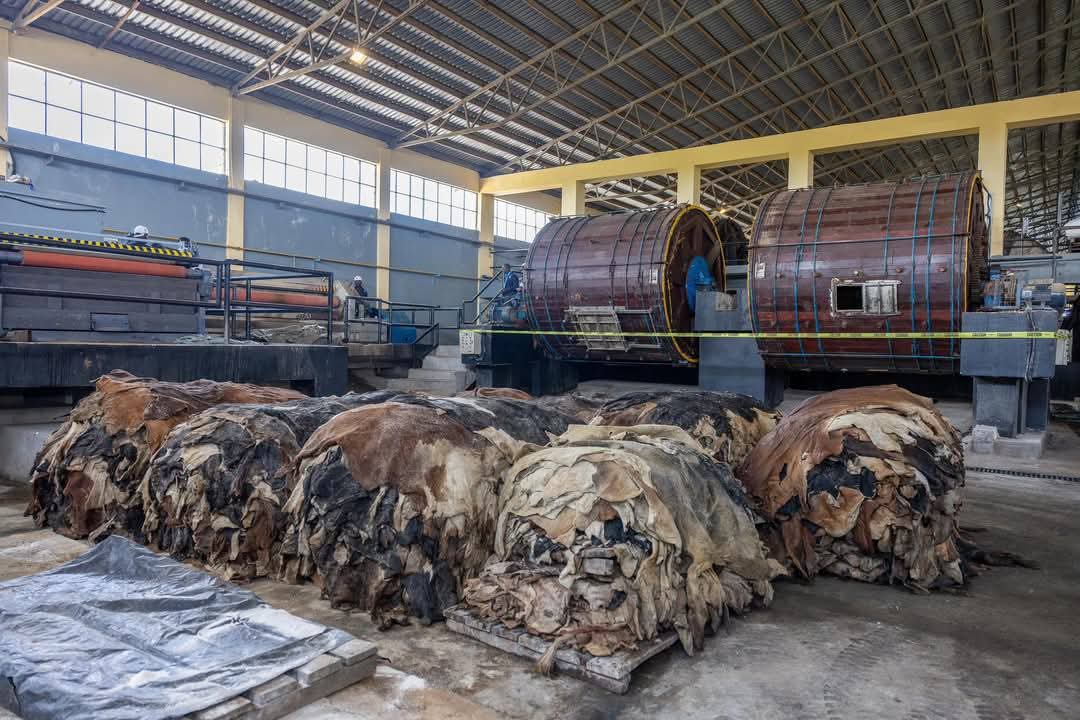
But this will no longer be the case, the factory that began its operations five years ago and was launched by President William Ruto in May 2025 has a capacity of processing over 2.4 million tonnes of hides and skins annually, giving a ready market for pastoralists, who would throw away, or sell at throw away price these livestock byproducts.
ENSDA’ Chief Executive Officer (CEO) Ngala Oloitiptip, in an interview, noted that the industry gets its raw materials from the surrounding Maa pastoralists community.
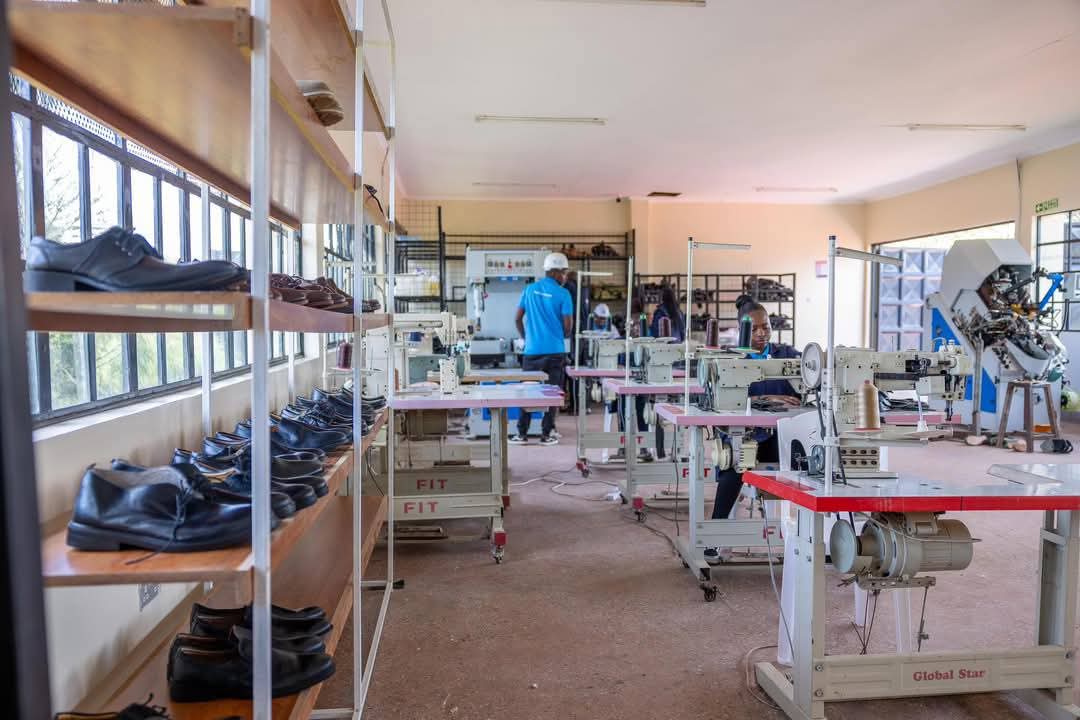
Oloitiptip reiterated that the factory had been expanded from producing 1.2 million square feet to producing 2.4 million square feet of leather per year.
The expansion of the factory, he said, aims at reducing the need to import leather products and create about 500 jobs directly and over 1,000 jobs indirectly.
“The tannery is currently well utilized. We are in a stage where we can confidently say that we are able to sustain ourselves.
“Leather is one of the new frontiers in the economy. There is adequate raw materials and processing capacity. If well harnessed, then it can become one of those major players in the economy as the country will not be importing shoes,” he said.
The CEO added that at optimal capacity utilization level, the factory can earn boosted income to be ploughed back to the economy.
Oloitiptip encouraged farmers to form groups and register with the organization so that they could easily sell their leather products and get a profit.
“The farmers’ groups should register with us to facilitate easy purchase and payment of their products. We encourage the farmers not to throw away skins and hides when they slaughter their animals,” he continued.
The CEO said the management of ENSDA has continued sensitizing and holding capacity building forums for the farmers to inform them on the quality of skins and hides which are marketable, as skins of branded animals fetch lesser money than that of unbranded animals.
Mary Kipai, a Loita livestock farmer and a bead-maker, said the factory came as a blessing to the Maa community who used to throw their hides and skins in the bushes where wild animals would eat them.
“We now get value for the hides and skins as we have a ready market to sell them. Even when our livestock die from disease or anger, the farmer does not incur total loss as they have a ready market for their hides,” she said.
Emily Kipila, a bead trader, lauded the factory saying it has helped improve the economy of the people in the area as jobless young people have been employed to do both professional jobs and casual labour.
“The factory has brought hope to the community. Young people who used to be jobless are now earning a fortune from the industry. They have come back home to help their aging parents hence giving hope to the society,” Ms. Kipila said.
Leather industry in Africa generates up to $100 billion per year, which Kenya should tap into to raise the economy of the pastoralists, Oloitiptip said.
The National Chamber of Commerce and Industry (NCCI) South Rift Region Director David Mpatiany underscored the need for the industry to partner with the leather factory to increase production and meet market demand.
“All stakeholders in the leather industry should join hands to ensure the industry is successful. We, the business community, are ready to partner with the government to ensure the leather industry succeeds in its operations,” he said.
During the fourth Medium Term Plan (MTP) dissemination forum, Narok residents prioritized the expansion of leather and dairy produce as most of the Maa community keeps livestock.